
Time is a Created Thing
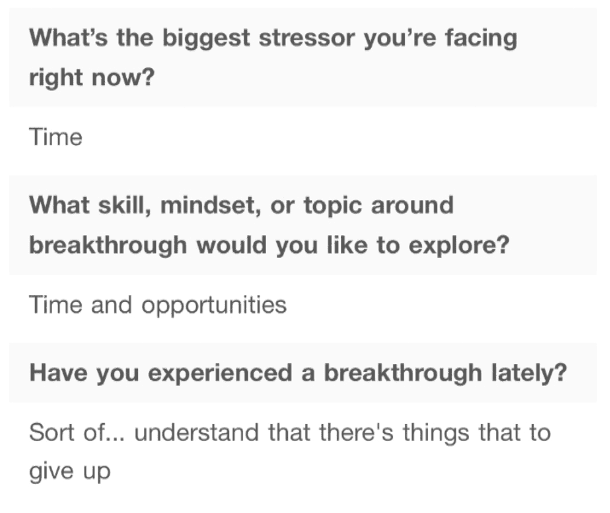
In this week’s Sunshine Inbox, we address a stressor that most of us like this member would have experienced: time.
It is interesting how time can be experienced so differently depending on the state of mind that we are in. When we are enjoying the moment or experience, time just seems to fly by. When we have endless tasks to do, it feels like there is no time. Yet for other tasks, time seem to crawl so slowly for example, when I am doing a plank, 1-minute sure feels like an hour. 😊
Time Distortion Techniques
Time distortion techniques in Neuro-Linguistic Programming (NLP) is a fascinating and useful concept of how we can consciously shift how we experience time rather than how we measure it.
NLP is a field developed in the 1970s by Richard Bandler and John Grinder, inspired by the work of therapists like Milton Erickson and Virginia Satir. At its heart, NLP explores how our thoughts (neuro), language (linguistic) and behavior patterns (programming) shape our experience of the world and how we can gently shift those patterns to create change.
NLP offers tools and techniques to reframe limiting beliefs, shift emotional states, further enhance communication and yup, reshape our experience of time
Unconsciously, we are already doing time distortions such as the examples listed above and others such as a joyful 3-hour dinner conversation with a friend that feels like it lasted five minutes. A 3-minute wait in a queue which feels like an eternity. Or a single day that feels like a lifetime because of its emotional intensity such as when I lost my grandma recently.
What other examples have you experienced?
Time distortion techniques help us:
You can test out the following techniques and find one that suits you.
Technique 1: To create a felt sense of spaciousness when tasks feel overwhelming
Close your eyes for a moment. Imagine time as a gentle river. Not rushing but flowing steadily. Picture yourself stepping into this river and as you do, everything slows. The ticking clock fades. You have all the time you need.
Now, bring to mind one task you need to complete. See yourself doing it calmly, with ease. Notice how your breath slows, your shoulders soften. Let this feeling expand to the rest of your day.
Repeat this visualization whenever urgency creeps in.
Technique 2: When the day feels tight and too many tasks still undone
Close your eyes. Imagine time as petals unfolding slow, deliberate, generous.
Visualize yourself moving through your to-do list with grace. Each action is a breath, not a sprint. Let your body soften into this rhythm. You are not behind.
Think, feel and see that you are blooming in your own time.
Technique 3: To energize and quicken time when motivation is low or procrastination sets in
Imagine you’re watching a movie of yourself completing your task fast-forwarded, smooth, efficient. You’re focused, flowing, done before you know it.
Now step into that version of you. Feel the momentum. Let your body match the rhythm of that energy. Begin your task with that same clarity and speed.
This technique is about activating your inner pilot.
Technique 4: When energy dips and tasks feel heavy
Imagine a golden thread pulling you forward that is quick, light, purposeful.
See yourself completing each task with ease, like beads sliding onto a string. You’re not rushing but moving forward with clarity.
Begin and let momentum carry you to complete your tasks.
Two Second a Day
“I wish I had come across this book earlier!”
I found myself exclaiming this often as I started to digest the insights from the book 2 Second Lean: How to Grow People and Build a Fun Lean Culture by Paul A Akers.
He shared about his Three Pillars of Lean:
I like to highlight something he shared with regards to Pillar 2 which we can certainly apply to enjoy greater freedom and expansiveness of time:
“I said to my people, “Just give me a single 2 second improvement a day. That’s it. That’s all I ask for. A 2 second improvement. There is not a person on earth, let alone a mouse or a hamster that can’t figure out how to improve something by just 2 seconds. I made the bar so low that everybody could jump it, and indeed that’s what happened.” – Paul Akers.
The improvements can be gleaned from his first Pillar that highlights the eight wastes:
Hmm… so what 2 second improvement can I make? My mind started thinking as I was reading the book.
Yes! Why haven’t I thought of this?
I have a preference for physical books but with my frequent travels, I subscribed to my country’s library app which lets me loan e-books on the go.
My improvement for the day was simply to add the app onto my taskbar instead of having to scroll to access the app all the time. Simple fix but it saved me wasted motion and time.
Another 2 second improvement was to change a bedtime habit of mine. When it was time for bed, I will place my bathrobe on a chair and the bedroom slippers near to my bed. And in the morning, I will then keep the robe and slippers in the wardrobe. What I do now is when it is time for bed, I place both the robe and slippers into my wardrobe. One action less in the morning.
I have started to apply this 2 second a day to my work as well.
For example, I have tendency to jump into creating mode for programmes even before a project is confirmed. Which is fun for me to do but was excess inventory and wasted potential. Time that I can spend on more viable activities like reading.
I also started using Office OneNote which has been a game changer for me to synch all my notes, information and so forth.
Another change I did was to place the phone at the dresser table instead of my bedside table. And to only check work-related messages when I am showered and dressed. This provided me with a peaceful start to the day and kept annoyance at bay.
What about you? What 2 second improvement can you make today to free up time?
Time is an Elusive Companion We All Dance With
Reflection
Action
Lao Tzu shared that “Time is a created thing. To say ‘I don’t have time,’ is like saying, ‘I don’t want to.” Shifting our language will shift our perception of time.
For example, a corporate client observed that his leaders kept using the phrase “I am so busy and I don’t have time to…”. It soon became a habitual phrase that they used all the time to the point that it became an excuse. That also cascaded down to the teams. One of the actions the CEO took was to ban the use of the phrase. Soon, things got into a more useful and productive rhythm.
In the same way, I have never been a fan of the hustle culture as to me, it created tension for the people who are always hustling. I know lots of founders who hustle that suffer bad health. Not surprising.
Observe your language in relation to time to check if it is a stressor to you. Tweak non useful words that are a hindrance to you being a master of your time.
Practice for the Week
Here is a practice that promotes a curiosity mindset and growth before your day begins. Before diving into work each day, spend just 2 minutes learning something new. It could be a quote, a podcast snippet, a short article or a micro-video. The goal isn’t mastery; it is to create learning momentum. Doing this activates your brain with novelty, builds a habit of intentional growth and creates a sense of spaciousness before task immersion. It also sparks off opportunities too.
For example, during one such 2-minute learning sprint, I came across a list on the top 10 Ted talks that are worth more than an MBA. That’s how I learnt about Growth Mindset, watched the talk, ordered the book and went on to use it for my work with companies and individuals. A 2-minute sprint that reaped impact work satisfaction and monetary benefits too.