
Pleasure In Commitments
Shortly after making the above video, we approached the hotel conceirge to arrange for a taxi to take us to where the memorial service was held. When the staff heard that we were going there for a funeral, he immediately mentioned the name of our friend and went on to say enthusaistically that a road should be named after him for what he had done.
During the service, we heard sharing from his brother, colleagues and friend. Again, the words dedication and commitment popped up numerous times. Hearing the stories showed the impact of the legacy he left behind.
And in next week’s The Good Life Sessions, we have the pleasure of hearing from Winnie Cheong, the founder of The Red Collective which tackles the twin challenges of food insecurity and food waste in Singapore. She and her team of volunteers’ commitment creates beneficial impact by tackling food waste and hunger simultaneously.
That’s the version of commitment that I grew up with which guided me.
Following in my parents’ footsteps of active volunteerism in their church community, I too became a volunteer as I saw that commitment as a way to create a better world.
That spilled over to my personal life where commitment became a sacred promise and ethos.
Likewise, my gut feel is that for those of you who joined the club, commitment is something you resonate with.
The lack of commitment wouldn’t be an issue you faced. Instead, it is highly likely that you may have what I termed as unhealthy blind commitment.
The challenge is that with a fixed perception of what commitment is, we can blindly adhere to it without reflection nor consideration for our well being or happiness. It can also quietly erode the well-being of others, integrity or collective flourishing.
Examples of Unhealthy Blind Commitment in Our Professional Life:
Examples of Unhealthy Blind Commitment in Our Personal Life:
Reflecting on my journey, I have been guilty of unhealthy blind commitments that have cost me dearly.
Equally, there are many examples of commitments that I am delighted with. These commitments allowed me to achieve goals, actualise my dreams and also further support others to flourish amongst others. No regrets on these.
What I have learnt as the wiser me is to reflect on my commitment(s) to see if they are rooted in love and discernment or because of fear, guilt and limiting belief.
At the end of the day, you will have to discern if the commitment is healthy for you.
The friend who passed on, he continued to pressed on with his work/ role commitments even when he was diagnosed with cancer. I heard that staying active that way allowed him to flourish inspite of the illness.
Likewise, your choice to stay committed to people, roles or ideals will always remain your choice. The invitation today is to also include your own wellbeing in the discernment equation.
That commitment also means you are flourishing too.
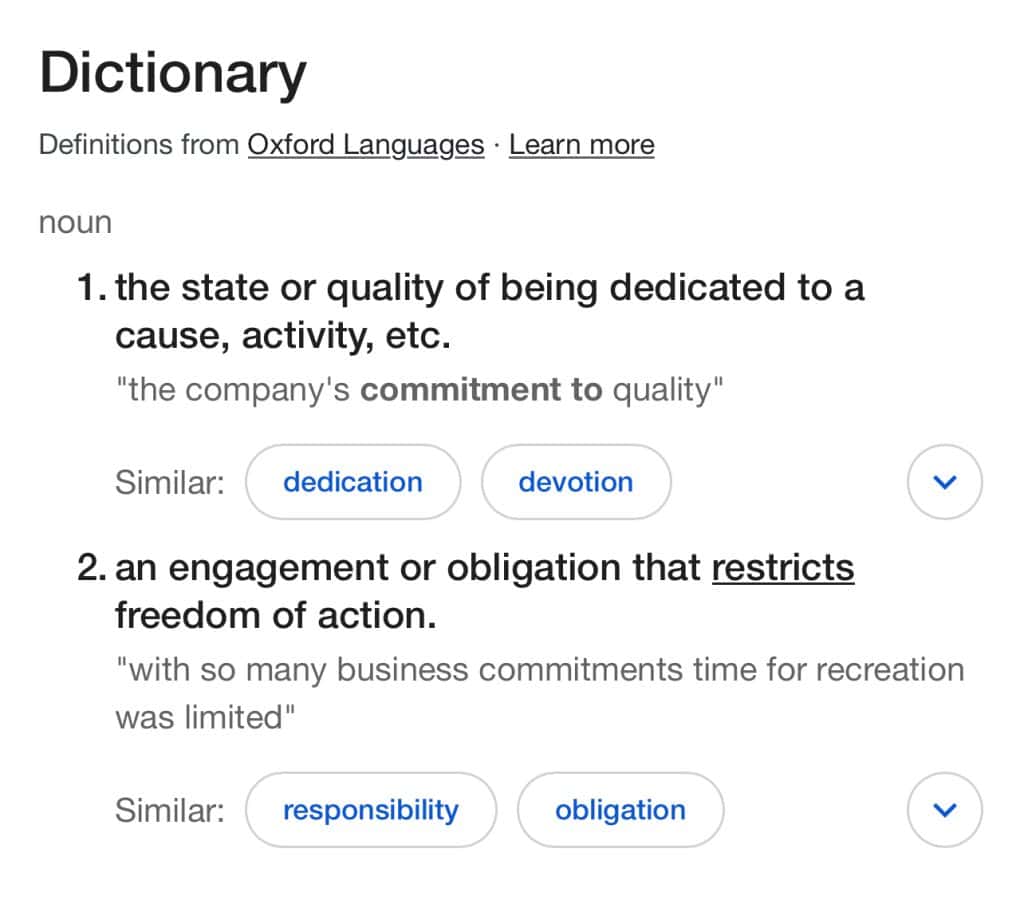
Commitment is Devotion with Discernment
Reflection
Action
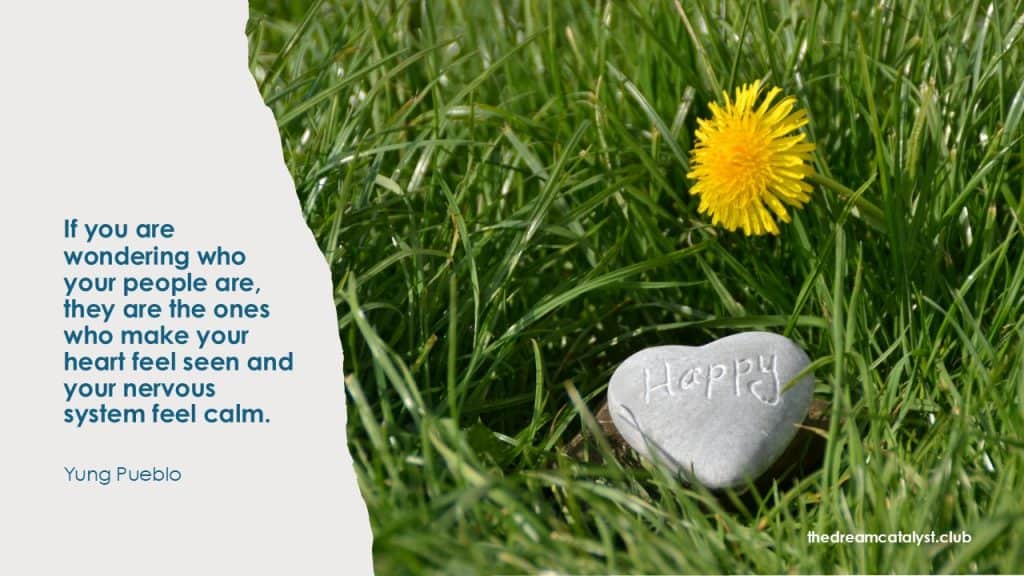
I really like this quote that I came across by Yung Pueblo:
“If you are wondering who your people are, they are the ones who make your heart feel seen and your nervous system feel calm.”
I have never thought of it in this light but some behaviors do spike my nervous system for example, I have a disdain for those who enjoys gossiping about others even if they think it is harmless chatting. I found myself interrupting such people more frequently with “I am not interested to hear”. One of the commitments I made to myself for my own well-being is to be mindful of who I spend my time with.
What about you? Is your circle making your heart feel seen and your nervous system feel calm?
Practice for the Week
For this week’s practice, you may like to do this activity.
Step 1 – List 3 current commitments:
It can be personal or professional, anything that takes your time, energy or attention.
Step 2 – Ask yourself for each one:
Step 3 – Choose one action:
Make a call, set a boundary or a doable step that you can do to ensure your continued flourishing in your commitment.